Online Poker Cab 026
Poker Combinatorics: Counting Hand Combos and the Blocker Effect
- Reading minutes4 min
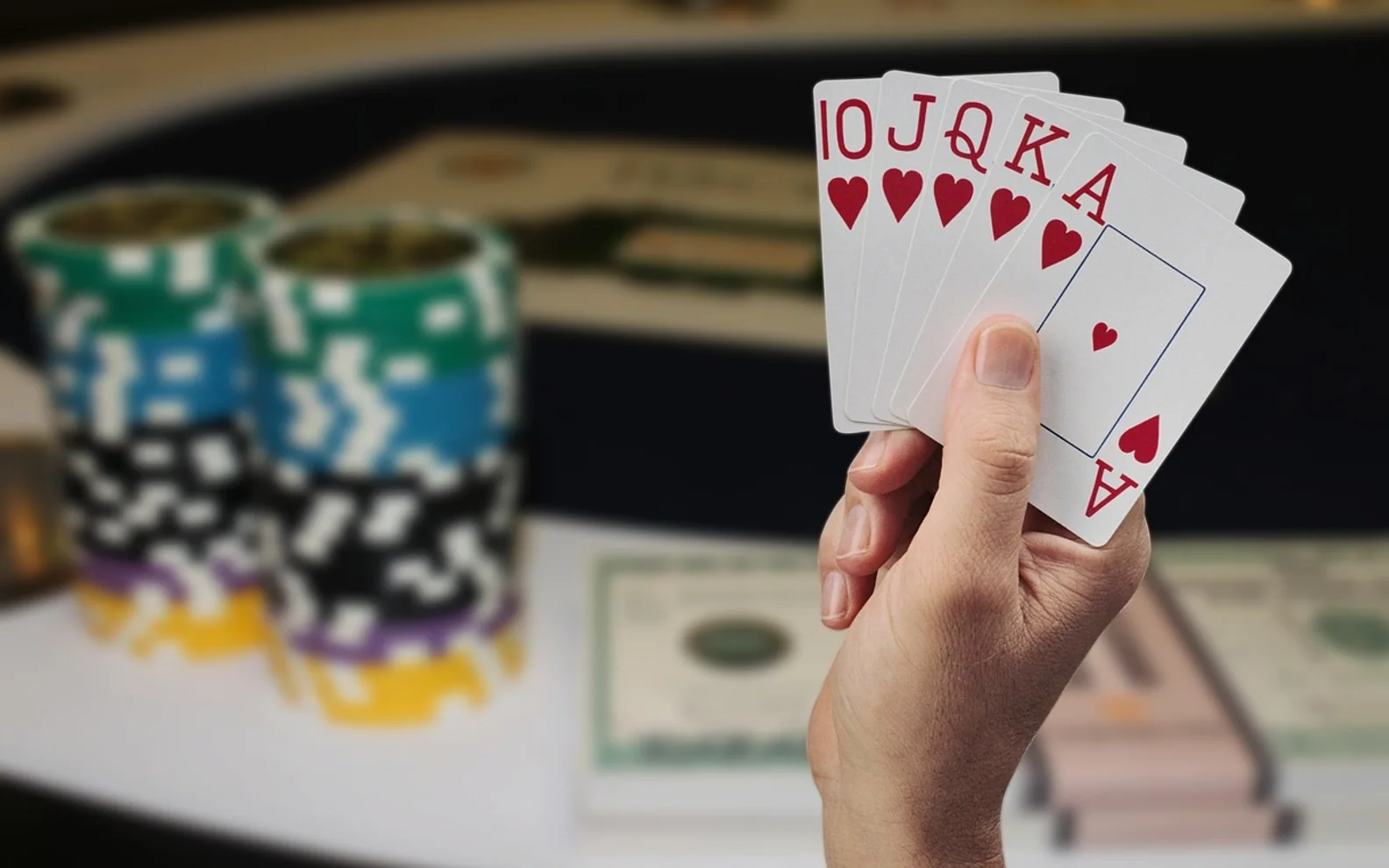
Poker combinatorics is the habit of counting exactly how many ways an opponent could hold each hand. Any pocket pair can be dealt in 6 ways, any suited two-card hand in 4 ways and any unpaired offsuit hand in 12 ways, so a hand like ace-king, suited or not, comes in 16 combinations. Cards you can see, in your own hand or on the board, take combinations away. That small piece of arithmetic is the backbone of hand reading.
Where the numbers come from
Two cards from a 52-card deck can be dealt in 1,326 different ways once order is ignored. Grouped by rank and by whether they share a suit, those 1,326 holdings collapse into 169 hand types.
| Hand type | Example | How to count | Combos |
|---|---|---|---|
| Pocket pair | Q-Q | choose 2 of the 4 queens | 6 |
| Suited, unpaired | A-K suited | pick one of 4 suits for both cards | 4 |
| Offsuit, unpaired | A-K offsuit | 4 aces × 4 kings, minus the 4 suited pairs | 12 |
| Unpaired, any suits | A-K | 4 × 4 | 16 |
A quick check: 13 pairs × 6, plus 78 suited types × 4, plus 78 offsuit types × 12, gives 78 + 312 + 936 = 1,326. Every starting hand is accounted for.
The general formula
The tool behind these counts is the combination: the number of ways to choose k items from n when order does not matter, written C(n, k) and equal to n! ÷ (k! × (n − k)!). Choosing 2 queens from 4 gives 4! ÷ (2! × 2!) = 6. The same formula, scaled up, gives C(52, 5) = 2,598,960 five-card poker hands, of which 13 × 48 = 624 are four of a kind: pick the rank, then any fifth card. The same counting produces the famously long odds against a royal flush.
The first surprise: unpaired hands are common
Because ace-king has 16 combos and any single pair has 6, an opponent is about 2.7 times as likely to hold ace-king as to hold, say, pocket kings, before any other information arrives. Ranges built mostly from unpaired hands therefore contain far more combinations than a hand chart makes them look. A range written as AA, KK, QQ, AK and AQ holds 6 + 6 + 6 + 16 + 16 = 50 combos, and 32 of those, nearly two-thirds, are not pairs at all.
Blockers: removing combos you can see
Every card you hold is a card nobody else can hold. When one of your cards matches a rank in an opponent's possible hand, it blocks some of those combos.
- You hold one ace. An opponent's A-A drops from 6 combos to 3 (choose 2 from the 3 remaining aces), and A-K drops from 16 to 12 (3 aces × 4 kings).
- You hold A-K. A-A falls to 3, K-K to 3, and A-K itself to 9 (3 × 3).
- A king lands on the board. Anyone holding K-K now has a set, but only 3 combos of it remain.
A worked example: an opponent's range is A-A, A-K and A-Q. With no blockers that is 6 + 16 + 16 = 38 combos, and pocket aces make up about 16% of them. If you hold an ace yourself, the range shrinks to 3 + 12 + 12 = 27 combos, and pocket aces fall to about 11%. One card in your hand has redrawn the whole picture.
Counting combos at the table, step by step
- List the hands the betting so far makes plausible.
- Give each its starting count: 6 for a pair, 4 suited, 12 offsuit.
- Strike out combos that need a card from your hand.
- Strike out combos that need a card from the board.
- Compare the totals and see which part of the range is now biggest.
The result is not a read on a person; it is a weighting of possibilities. It might show that a board pairing one of your own cards makes certain sets far less likely, or that a range which sounds strong is mostly unfinished hands. For the community cards themselves, our chart of flop odds applies the same counting to the first three board cards.
Combinatorics in Omaha
Four hole cards change the scale. Each Omaha hand contains C(4, 2) = 6 two-card pairs, and because a finished hand must use exactly two of them, as explained in our Omaha poker rules, every player effectively brings six Hold'em-style holdings to the table. Blockers grow in importance too: holding the ace of a suit when three cards of that suit sit on the board means no opponent can hold the ace-high flush.
Common mistakes
- Treating every hand on a range chart as equally likely, when unpaired hands carry more combos.
- Forgetting the board, which removes combos just as your own cards do.
- Counting a suited hand as 4 combos after one of its cards has appeared.
- Expecting combos to predict a single hand; they describe likelihood across many.
For the counting rules in their simplest form, start with card probability from a 52-card deck.
A word before any of this goes near a real table: poker for stakes is an adults-only pastime, the money in play should be money set aside for fun rather than counted on as income, and online poker is legal in some places and banned in others, so confirm the position where you live.