Game Tech Cab 032
Home Karaoke Tech Inspired by Korean Rooms: Mics, Echo and Latency
- Reading minutes5 min
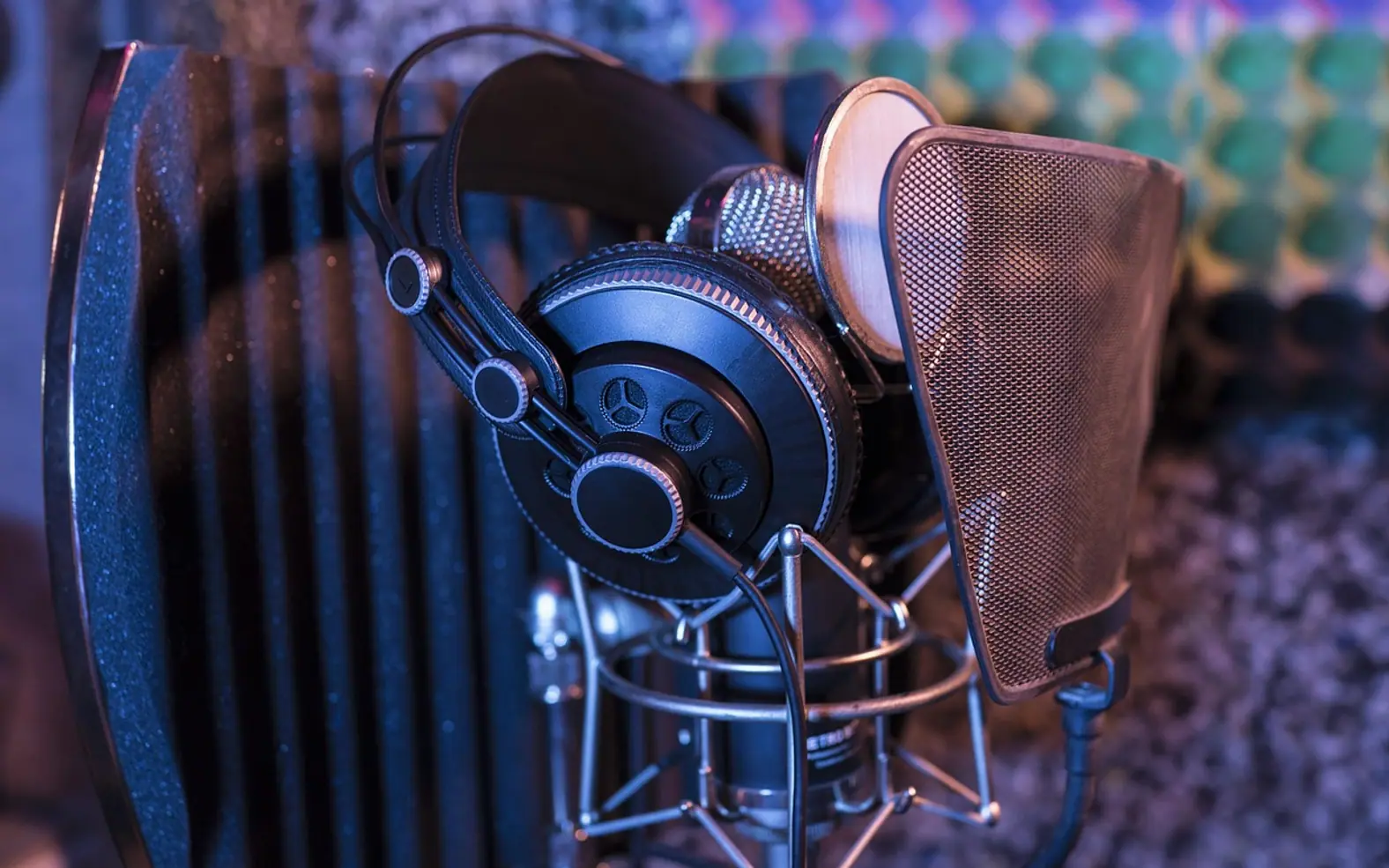
A Korean karaoke room sounds good because it is built as a small, purpose-tuned audio system: microphones made for close singing, an effects unit that adds echo and reverb to the voice, speakers with a subwoofer underneath, and padded walls that stop the sound from bouncing around. You can get surprisingly close at home with a wireless microphone set, a karaoke app on a smart TV, a wired connection to decent speakers and a few soft furnishings. The weak point for most home setups is not the hardware itself but delay, which usually comes from Bluetooth, and that is fixable.
What is actually going on inside a noraebang
Noraebang, literally "song room", is the everyday Korean karaoke format: a private room rented by the hour for a group of friends, family or colleagues. From a technical point of view, every room is a self-contained rig designed around one goal, which is making untrained voices sound confident.
- Dedicated microphones. Handheld dynamic microphones are tuned for a voice held close to the grille. They pick up the singer and reject much of the room.
- Echo and reverb on the voice. A karaoke machine or mixer adds a short, repeating echo plus a wash of reverb. This smooths out pitch wobbles and makes a voice feel larger.
- A subwoofer. Backing tracks have a firm low end, which gives the singer a solid rhythmic floor to follow.
- Acoustic treatment. Upholstered seating, padded panels and carpet absorb reflections, so the sound stays clear even at volume.
- Zero noticeable delay. The microphone signal is processed and sent to the speakers almost instantly, so you never hear yourself a beat late.
Room versus living room at a glance
| Element | In a karaoke room | Home approximation |
|---|---|---|
| Song library and lyrics | A dedicated machine with a large catalogue | A karaoke app on a smart TV, streaming stick or games console |
| Microphones | Wired or wireless handhelds tuned for vocals | A wireless handheld set with its own receiver |
| Voice effects | Built-in echo and reverb controls | A small mixer with onboard effects, or a receiver that includes them |
| Speakers | Wall-mounted speakers plus a subwoofer | Powered bookshelf speakers or a soundbar with a sub |
| Acoustics | Padded walls, sofas, carpet | Rugs, curtains, cushions, a bookcase |
Building the setup step by step
- Pick the screen source. Many smart TVs and streaming devices offer karaoke apps with scrolling lyrics. Check that the app lets you use an external microphone rather than only a phone mic.
- Choose a microphone set with a receiver. Wireless sets that plug into a mixer or receiver by cable are generally more dependable than microphones that pair straight to a TV. Two handhelds make duets possible.
- Add a small mixer. A compact mixer lets you balance music and voices, and models with a built-in echo or reverb knob recreate much of the karaoke-room character. Keep the effect modest; too much makes lyrics blur.
- Connect the speakers by wire. Run the TV's audio output and the mixer into powered speakers with cables. If your speakers have a subwoofer output, use it.
- Soften the room. Close the curtains, put a rug down and fill a bare wall with a bookcase or fabric. Hard, empty rooms make vocals sound harsh.
- Test at low volume first. Walk around the room while someone sings and listen for feedback, a howl that appears when a microphone points at a speaker. Move the speakers forward of the singers to cure it.
The Bluetooth latency problem
Bluetooth audio buffers the signal before playing it, which adds a delay that is easy to ignore with films but hard to ignore when you are singing. If your voice reaches the speaker a fraction late, you start chasing yourself and the timing falls apart. The same principle comes up in other entertainment tech; our piece on virtual reality slots and why latency matters explains how even small delays break the sense of presence. The practical fixes are simple: keep the microphone path wired from receiver to mixer to speakers, use Bluetooth only for background playlists, and if the TV has a lip-sync or audio delay setting, adjust it until the lyrics and music line up.
Do I need a subwoofer?
Not strictly. A sub makes backing tracks feel fuller, but low frequencies travel through floors and walls more than anything else. In a flat, a pair of good bookshelf speakers is often the better compromise.
Why do my vocals sound thin compared with the music?
Usually the music is too loud or the voice has no effect on it at all. Lower the track a little, add a touch of reverb and hold the microphone close, roughly a fist's width from the mouth.
Keeping the neighbours on side
Home karaoke works best when it is not a source of friction. Agree a finishing time, keep the bass knob low after dark and close windows. Soft furnishings help here too, because a room that absorbs sound leaks less of it. Headphone monitoring is possible with some mixers, though singing along to a track that only you can hear loses much of the group fun. Hearing deserves care as well: if your ears ring after a session, the volume was too high.
When the real room is worth it
A home rig is handy for a birthday or a quiet weeknight, but it rarely matches a professionally tuned room with a deep catalogue, proper treatment and no neighbours to consider. If you are travelling to Seoul, an hour in a noraebang with friends is an easy way to hear what a well-designed karaoke system can do. Korean-language venue guides such as https://karaokeofgangnam.com/ describe how karaoke rooms in the Gangnam area are set up and what a visit with a group usually looks like. If drinks are part of the night, pace yourself and leave the car at home.
Sound is a craft in every corner of entertainment design. Game studios, for example, spend real effort on audio cues and loops, as our walkthrough of how a slot game goes from sketch to screen shows, and karaoke rooms apply the same thinking to one simple job: making everyone who picks up the microphone sound a little better than they expected. Any gambling content on this site is meant for adults over 18 only, as entertainment rather than income, and the law differs by country, so check where you live.